
Senhora da Agonia Festival in Viana do Castelo: the Minho's grandest pilgrimage
Some festivals are watched and some are felt in your bones. The Festival of Nossa Senhora da Agonia, which takes over Viana do Castelo in mid-August, belongs firmly to the second kind. For several days the city on the banks of the river Lima becomes the greatest pilgrimage in the Minho: streets carpeted with flowers, women adorned with filigree gold, drums shaking the ground and, on the final night, the sky ablaze over the river. Anyone visiting Northern Portugal at this time finds the very heart of Minho identity beating loud and proud.
A pilgrimage with over a century of tradition
Devotion to Our Lady of Agony is ancient, tied to fishermen and seafaring folk, but it was in the early twentieth century that the pilgrimage gained the festive scale we know today. The Costume Festival was born in 1906 and, two years later, the first Agricultural Parade appeared — the seed of today's spectacular ethnographic procession. More than a religious celebration, the Agonia became a living tribute to all that is most Minho: the work of the land, faith, music and dress.
Costumes and gold: an open-air museum
Guests of Alojamento Rio Neiva in Tregosa are just minutes away. Book via WhatsApp.
If one image defines the Agonia, it is the women in regional dress. The traditional Viana costumes, with their vivid colours, intricate embroidery and bright headscarves, parade alongside the gold — necklaces, earrings and filigree hearts passed down through generations and worth small family fortunes. At the Costume Festival, farm women, stewards and brides wear authentic pieces, and visitors quickly realise these are not stage costumes but heritage that is inherited and worn with pride.
Flower carpets, parade and giants
On the eve, neighbours and associations work through the night composing the famous carpets of flowers and coloured sawdust that cover the old town streets along the procession route. The historical-ethnographic parade is the great secular highlight: thousands of participants, dozens of allegorical floats and scenes recreating the customs of the whole region. In between, the gigantones (giant figures) and big-heads delight the children, while the zés-p'reiras and drumming bands fill the city with a rhythm you feel deep inside.
The sea, the river and fireworks over the Lima
The bond with the sea lives on in the procession that carries the image of Our Lady down to the river, a gesture of gratitude from the fishermen. But it is the final great moment that stays with those who travel from afar: the spectacular fireworks over the river Lima, mirrored in the water and framed by the Eiffel bridge. It is the perfect close to intense days, with the whole city gazing skyward.
How to visit from Tregosa
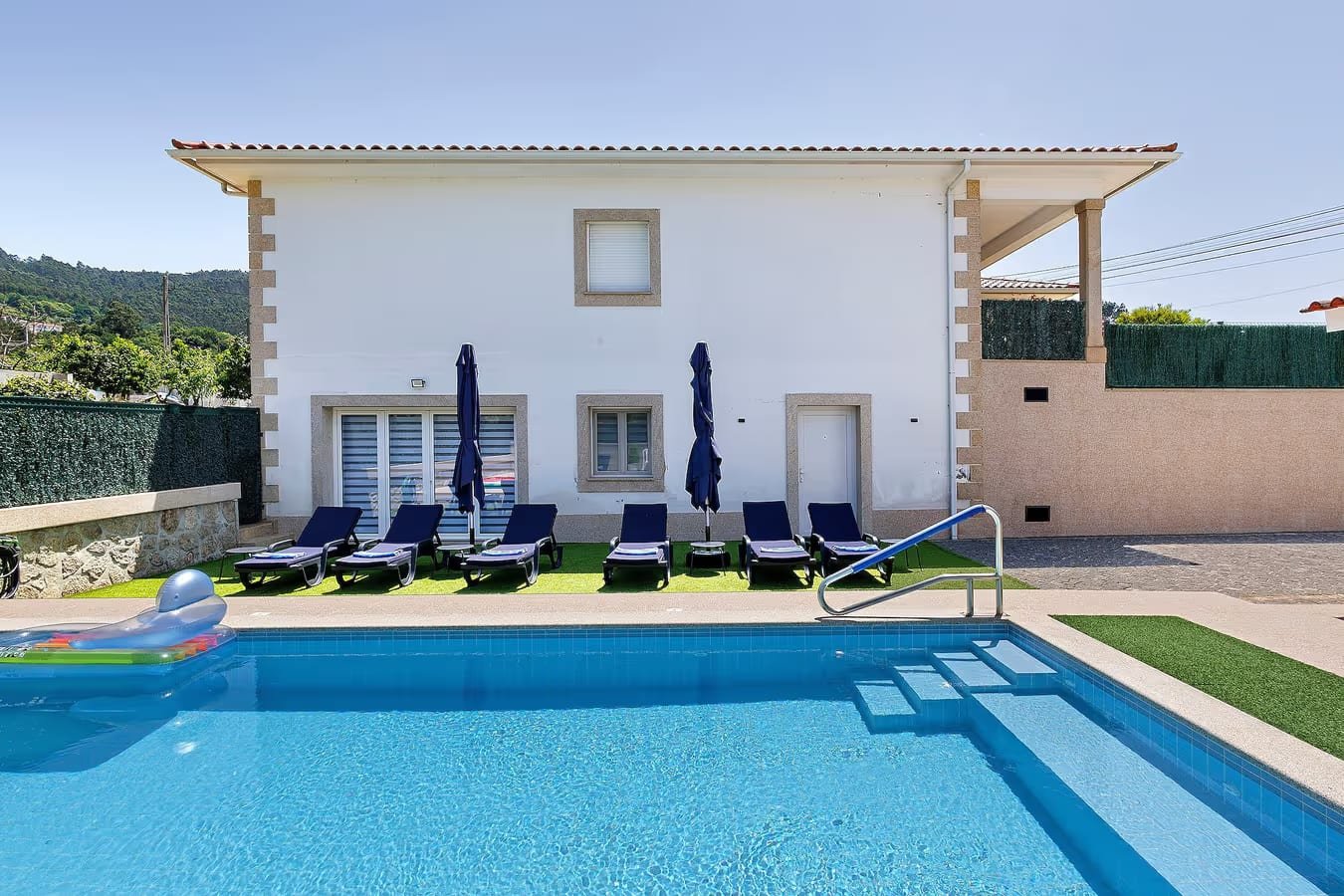
Viana do Castelo lies about 25 to 30 km from Tregosa, in the municipality of Barcelos — a drive of little more than half an hour. Rather than searching for a room in the packed city during the pilgrimage, many visitors prefer to stay in the countryside and travel in. Just minutes away is our holiday house with a private pool in Tregosa, perfect for returning to the calm after a day of festivities. If you are planning to experience the Agonia this August, Alojamento Rio Neiva makes an excellent base in the Minho — message us on WhatsApp and book directly with no commissions.
Frequently asked questions
When is the Senhora da Agonia Festival held?
It takes place every year in mid-August, around the 20th, the liturgical feast day of Our Lady of Agony. The highlights, such as the ethnographic parade and the fireworks, are concentrated over that weekend, but the festivities span several days.
How far is Viana do Castelo from Barcelos and Tregosa?
Around 25 to 30 km, roughly a 30 to 40 minute drive. It is perfectly easy to stay in the countryside at Tregosa and head to the pilgrimage without any hassle.
Is the Agonia good for children?
Yes. Between the giant figures and big-heads, the allegorical floats of the parade and the closing fireworks, there is plenty to enchant younger visitors. Just keep an eye on the crowds and the August heat, and bring water and sun protection.
Where is the best place to watch the fireworks over the Lima?
The fireworks are launched over the river, near the riverside area and the iconic Eiffel bridge, so the banks of the Lima and the waterfront offer the best views. Arrive early, as the best spots fill up quickly.